Private Clubs, Digital Suites, and the New Language of Australian Casino Exclusivity
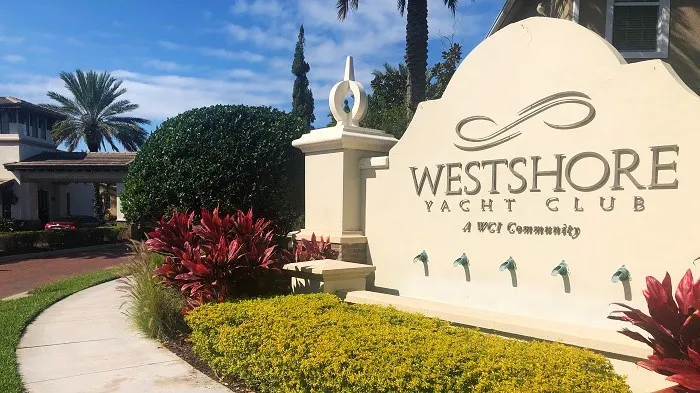
Photo: Jbyrne123, CC BY-SA 4.0, via Wikimedia Commons
For most of the twentieth century, the definition of exclusive gaming in Australia was entirely physical. It resided in the weight of a heavy door swinging shut behind you, in the particular quality of silence that fell over a well-appointed members' room, in the understanding — shared without words — that you were among a carefully selected few. From the grand rooms of the Melbourne Club's quieter corners to the discreet private gaming salons that have operated in Sydney's inner suburbs for generations, Australian high-society gaming carried with it an almost architectural sense of privilege.
That definition is now being actively renegotiated. Not discarded — the heritage establishments retain a gravitational pull that no digital interface has yet managed to fully counter — but complicated, refined, and in some important respects, surpassed.
The Heritage of Brick-and-Mortar Prestige
Australia's private gaming clubs occupy a peculiar cultural position. Unlike the grand casino resorts of Las Vegas or Macau, which wear their extravagance openly, the most prestigious Australian establishments have historically prided themselves on restraint. The exclusivity was never principally about chandeliers or spectacle. It was about access — the knowledge that not everyone could simply purchase their way in.
Melbourne, in particular, has long maintained a gaming culture with deep roots in the city's broader social establishment. Private members' clubs, some with histories stretching back over a century, have provided spaces where the financial elite could engage in serious play without the intrusion of the general public or the gaze of casual observers. The vetting processes for membership at the most distinguished venues are notably rigorous — references from existing members, financial assessments, and in some cases, a waiting period measured in years rather than weeks.
Sydney's equivalent establishments tend toward a slightly different character — cosmopolitan where Melbourne's are institutional, international in flavour where Melbourne's lean toward the domestic establishment. The private gaming rooms accessible through certain luxury hotel partnerships in the CBD have attracted a clientele that is genuinely global: executives, visiting dignitaries, and the kind of wealth that travels without fanfare.
What both cities share is the understanding that the physical environment carries its own meaning. The quality of the baize, the ratio of staff to players, the availability of a particular single malt without having to request it — these details communicate something that cannot be easily quantified but is immediately felt by anyone who belongs in such a room.
What These Venues Cannot Offer
For all their undeniable appeal, Australia's premium physical gaming establishments carry inherent limitations that have become increasingly difficult to overlook as the sophistication of online alternatives has grown.
Geography is the most obvious constraint. A member of a distinguished Melbourne club who finds themselves in Brisbane on business, or travelling through regional New South Wales, has no access to their preferred gaming environment. The experience — the particular combination of familiar faces, trusted staff, and curated atmosphere — is entirely location-dependent.
Operating hours present a secondary friction. Serious gaming rarely confines itself to convenient windows, and many private establishments, bound by licensing conditions and the practicalities of staffing premium environments, cannot offer the round-the-clock availability that a player in a different time zone, or simply a night owl by temperament, might require.
There is also the matter of game variety. A physical table is a physical table — it occupies space, requires a dealer, and limits the range of experiences available within any given venue. A player with sophisticated tastes across multiple game formats may find even the most prestigious room somewhat constrictive.
The Rise of the Digital VIP Suite
The online casino VIP experience of 2024 bears almost no resemblance to the rudimentary digital gaming of fifteen years ago. What the most distinguished online platforms now offer their highest-tier members is something that warrants genuine consideration alongside, rather than merely beneath, the established physical alternatives.
Personalisation is the area in which premium online environments have made perhaps their most remarkable strides. A well-curated digital VIP programme tracks not merely a player's wagering history, but their preferences across game formats, session timing, communication style, and the particular forms of recognition they find meaningful. The result, at its best, is an experience that feels less like a digital product and more like a relationship — one managed by a dedicated account host who understands that a player who prefers live dealer baccarat on weekend evenings and high-limit blackjack during weekday afternoons should never have to explain themselves twice.
The limit structures available to verified VIP members at premium online platforms now regularly match, and in some cases exceed, those available at all but the most rarefied physical venues. The notion that serious money requires a physical room has become, for many players, an increasingly difficult position to defend.
At Avantgarde Casino AU, the VIP suite is designed around precisely this philosophy: that genuine exclusivity in 2024 is defined not by the address of a building, but by the depth of personalisation, the calibre of the gaming catalogue, and the quality of the relationship between platform and player.
A Question of What Exclusivity Actually Means
The more interesting question is not whether online VIP experiences are "as good" as their physical counterparts — that framing is too binary to be useful. The more productive question is what exclusivity is actually for, and whether its traditional markers still serve that purpose.
If exclusivity is primarily about financial qualification — ensuring that the gaming environment is populated by players of comparable means — then premium online platforms with rigorous verification processes and meaningful deposit thresholds accomplish this effectively.
If exclusivity is about discretion — the confidence that one's gaming activity is not visible to the general public — then a well-secured online account with a reputable operator arguably provides greater privacy than a physical venue where one might be recognised by a fellow diner in the adjacent restaurant.
Where physical establishments retain a genuine, perhaps irreducible, advantage is in the social dimension. The particular pleasure of being known by name in a room where that recognition carries weight, of gaming alongside others whose company one values, of the incidental conversations and relationships that form in shared physical space — these are experiences that no digital interface has yet managed to fully replicate.
The most sophisticated Australian players of 2024 do not, on the whole, experience this as a binary choice. They move between environments with the same ease that they navigate between different aspects of a complex life — appreciating the heritage and social texture of the established physical venues when occasion and geography permit, and embracing the refined convenience and personalised depth of premium online experiences when those qualities better serve their needs.
In this sense, the evolution of Australian casino exclusivity is not a story of replacement. It is a story of expansion — of what it means to play at the highest level becoming richer, more varied, and ultimately more genuinely accommodating of what discerning players actually want.