Reading the Room: How Australia's Most Accomplished Players Cultivate Instinctive Game Intelligence
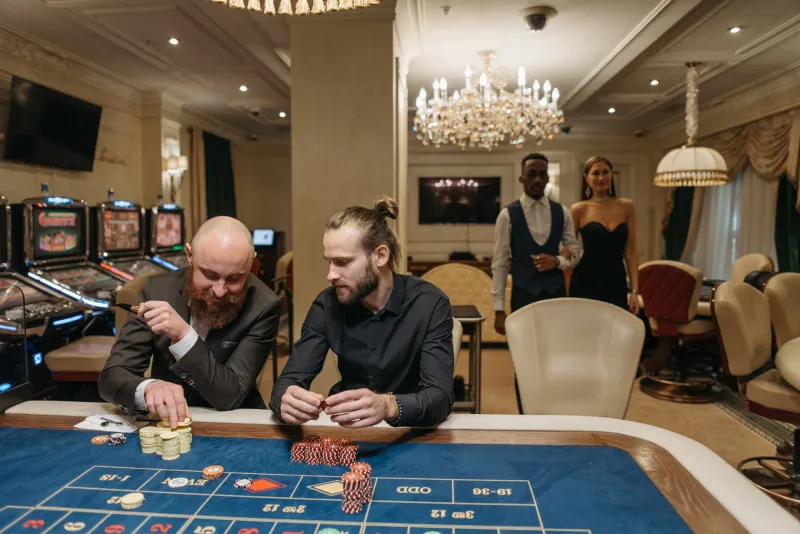
There is a particular moment, familiar to any seasoned high-stakes player, when certainty arrives before calculation. The cards have not yet turned. The dealer has not yet spoken. And yet something in the accumulated weight of the session — the cadence of the table, the almost imperceptible hesitation of an opponent, the rhythm of outcomes over the preceding hour — communicates a clear directive. Act now. Or wait.
This is not mysticism. It is not luck dressed in philosophical clothing. It is, in the most precise sense, the product of deliberate cognitive refinement — a faculty that Australia's most accomplished casino players have cultivated through years of structured attention and reflective practice. Understanding how this instinctive game intelligence is built, and how it differs from guesswork, is one of the most instructive inquiries available to any player who aspires to elite performance.
The Distinction Between Intuition and Impulse
The first and most important clarification is definitional. Intuition, as it functions in high-level gaming, is not an emotional response or a spontaneous urge. It is the rapid, largely unconscious synthesis of information that has been systematically internalised over hundreds — often thousands — of gaming sessions.
Neuroscientists describe this phenomenon through the concept of pattern completion: when the brain has encoded sufficient examples of a particular sequence, it begins to recognise partial instances of that sequence and anticipate its conclusion. For the elite player, this means that a cluster of subtle signals — a dealer's micro-expression, a slight variation in the pace of play, an opponent's breathing pattern — can trigger a confident read of the situation long before conscious analysis would arrive at the same conclusion.
Impulse, by contrast, is reactive. It responds to surface-level stimuli — a run of losses, a flash of excitement, the social pressure of the table — without the scaffolding of deep pattern knowledge. The difference between these two states is the difference between a seasoned barrister drawing on decades of courtroom experience and a first-year law student guessing at procedure. Both may occasionally arrive at the correct answer. Only one does so reliably.
Structured Observation as the Foundation
The development of genuine game intelligence begins not with playing, but with watching. Australia's most refined casino practitioners frequently describe periods in their development when observation — deliberate, disciplined, and analytically framed — formed the core of their practice.
This does not mean passive viewing. Structured observation involves entering each session with specific perceptual objectives: tracking the frequency with which a particular game dynamic resolves in one direction versus another, noting how different players respond to pressure at various stake levels, cataloguing the environmental conditions — table composition, session timing, dealer rotation — that correlate with particular outcomes.
Over time, this deliberate attention populates the player's cognitive library with richly contextualised data. The brain, remarkably efficient at compressing such data, begins to abstract patterns from the noise. What initially required conscious effort to notice gradually becomes automatic — perceived rather than deduced.
Premium gaming environments, such as those offered through Avantgarde Casino AU's live dealer suites, provide an ideal theatre for this kind of structured observation. The consistent presentation, professional conduct of dealers, and the unhurried pace of elite tables create conditions in which subtle signals are not drowned out by chaos, but are instead legible to the attentive player.
The Role of Sensory Calibration
Beyond cognitive pattern recognition, elite game reading involves a form of sensory attunement that is rarely discussed in conventional strategy literature. The physical and atmospheric qualities of a gaming session carry genuine informational content — and the player who has learned to register these signals accurately possesses a meaningful perceptual advantage.
Consider the auditory dimension of a live casino session. The pace of chip handling, the particular quality of silence that sometimes precedes a significant moment, the subtle shift in ambient conversation — these are not incidental background details. For the experienced player, they constitute a secondary data stream running in parallel to the formal mechanics of the game.
Similarly, the visual field around a table communicates continuously. Posture adjustments, eye contact patterns, the timing of a player's reach toward their stack — each carries probabilistic weight when viewed through the lens of accumulated experience. Players who have trained themselves to receive this information without actively seeking it — who have, in effect, widened their perceptual bandwidth — operate with a richer model of the game's current state than those attending only to the formal elements of play.
This is not a talent reserved for the naturally gifted. It is a trainable capacity, developed through the same mechanism as any other skill: repeated, attentive exposure combined with honest post-session reflection.
Reflection as the Mechanism of Integration
Perhaps the most underappreciated component of intuition-building is what happens away from the table. The players who develop the most reliable game-reading faculties are, almost without exception, those who engage in rigorous post-session analysis — not merely reviewing outcomes, but interrogating the quality of their perception throughout the session.
This means asking not only whether a decision proved correct, but whether the signals that informed it were accurately read. Were there moments when the instinctive read contradicted the eventual outcome? What additional information, had it been noticed at the time, might have refined the assessment? Where did confirmation bias — the tendency to notice signals that support an existing inclination and discount those that challenge it — distort the perceptual picture?
This reflective discipline is demanding. It requires a certain intellectual honesty that is not always comfortable to sustain. But it is the mechanism through which raw gaming experience is converted into the compressed, rapidly accessible pattern knowledge that constitutes genuine intuition. Without it, even extensive play time produces relatively modest gains in perceptual acuity.
Knowing When the Read Is Unreliable
A final and essential dimension of elite game intelligence is the capacity to recognise its own limits. The most accomplished players understand that their instinctive read is not infallible — that there are conditions under which the signal-to-noise ratio deteriorates, and the confident sense of 'knowing' is actually a form of cognitive overconfidence.
Fatigue, emotional disturbance, unfamiliar game formats, and sessions conducted under unusual social pressure are all conditions that can degrade perceptual accuracy without the player being aware of the degradation. The elite practitioner has developed a metacognitive awareness — an ability to monitor the quality of their own attentiveness in real time — that allows them to discount their instinctive reads when the conditions for accurate perception are not met.
This is, in a sense, the most sophisticated expression of game intelligence: knowing not only what you perceive, but how much to trust the perception.
The architecture of intuition, then, is not a mysterious gift distributed unevenly among the talented. It is a structure built deliberately, brick by brick, through observation, reflection, sensory calibration, and honest self-assessment. For those willing to invest in its construction, it represents one of the most durable and transferable advantages available in elite casino play.