Commanding the Room: How Australia's Elite Casino Players Engineer Their Environment for Sustained Mental Dominance
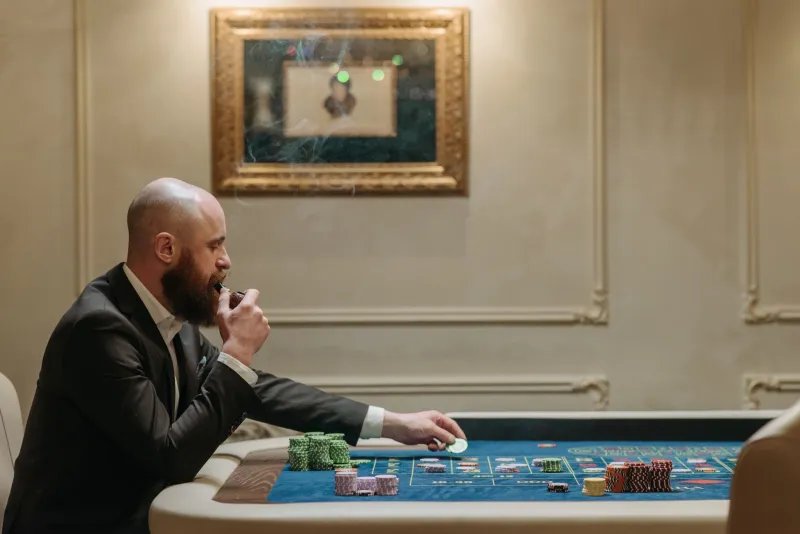
There is a particular kind of stillness that Australia's most accomplished casino players carry into a session — an unhurried, almost architectural composure that distinguishes them from the rest of the room. To the uninitiated, this quality reads as confidence. To those who study performance at its highest registers, it is something more precise: the visible result of a deliberately engineered environment.
The relationship between physical surroundings and cognitive output is well-documented in the fields of environmental psychology and neuroscience. Yet within mainstream gaming culture, this knowledge remains largely untapped. Elite players, however — those who treat the casino floor with the same strategic rigour one might apply to a boardroom or a surgical theatre — have long understood that the space around them is not merely a backdrop. It is a variable. And like all variables, it can be controlled.
The Science Beneath the Surface
Research in environmental psychology consistently demonstrates that ambient conditions exert measurable influence over attention, decision-making speed, and emotional regulation. Temperature, illumination, acoustic texture, spatial arrangement — each element interacts with the nervous system in ways that either support or erode sustained focus. A room that is too warm induces lethargy. Harsh overhead lighting accelerates mental fatigue. Ambient noise above a certain threshold fragments concentration and increases impulsive decision-making.
For a player engaged in a session spanning several hours — whether at a private gaming suite in Sydney's CBD or within the elevated rooms of a premium Melbourne venue — these effects are not trivial. Over the arc of an extended session, small environmental stressors compound. Decisions made in hour four are, neurologically speaking, made by a different mind than those in hour one, unless environmental conditions have been managed with intention.
Australia's most sophisticated players are acutely aware of this dynamic. They do not leave it to chance.
Light as a Strategic Instrument
Lighting is, perhaps, the most immediately actionable environmental variable available to the discerning player. Bright, cool-toned light promotes alertness and speeds processing — qualities desirable early in a session when pattern recognition and strategic assessment demand full cognitive bandwidth. As a session extends, however, the same lighting conditions that once sharpened attention begin to strain the visual cortex, contributing to the cumulative fatigue that erodes judgement.
Elite players who operate within private gaming suites — increasingly common among Australia's high-roller community — often request graduated lighting arrangements that shift subtly across a session. This is not an aesthetic preference; it is a performance protocol. Those operating within established venue environments develop an instinct for positioning themselves relative to light sources, favouring positions where illumination is diffuse rather than direct, and where glare on felt or screen surfaces is minimised.
The principle is straightforward: lighting should serve the eye, not perform for it.
Temperature, Posture, and the Architecture of Alertness
Beyond light, temperature regulation represents another lever that separates the strategically minded player from the merely comfortable one. Cognitive performance peaks within a relatively narrow thermal range. Environments that run warm — as many casino floors do, by deliberate design — promote a relaxed, slightly sedated physiological state that can subtly blunt decision-making acuity. A player who recognises this dynamic will, where possible, request cooler conditions within private settings, or will position themselves near ventilation points on a shared floor.
Posture, too, is a dimension that elite players manage with intention. The relationship between physical bearing and cognitive state is bidirectional: a collapsed, reclined posture signals to the nervous system that the moment does not demand vigilance. Upright, grounded seating — neither rigid nor slouched — maintains the physical alertness that underpins clear thinking. High-rollers who customise their private suite arrangements often specify chair height, armrest positioning, and table distance with a precision that might appear excessive to an outside observer. It is not excessive. It is evidence of understanding.
Sensory Micro-Choices and the Management of Cognitive Load
The environment speaks constantly. Every sensory input — the texture of a chip, the ambient sound of nearby conversation, the faint fragrance of a room — occupies a fraction of cognitive bandwidth. In isolation, these inputs are negligible. In aggregate, across an extended session, they constitute a form of low-grade cognitive load that, unmanaged, gradually depletes the mental resources available for strategic play.
Australia's elite players manage this load through deliberate sensory curation. In private gaming environments, this might involve the selection of background sound — specifically, low-tempo instrumental music has been shown in multiple studies to reduce cognitive load without diminishing alertness. In shared venue settings, it manifests as positional choices: selecting seats that minimise peripheral visual activity, or positioning away from high-traffic pathways that introduce unpredictable sensory interruption.
The objective is not to create a sterile, sensory-deprived environment. It is to curate a sensory landscape that is consistent, predictable, and undemanding — a space where the mind is free to allocate its full resources to the game at hand.
Private Suites and the New Standard of Environmental Control
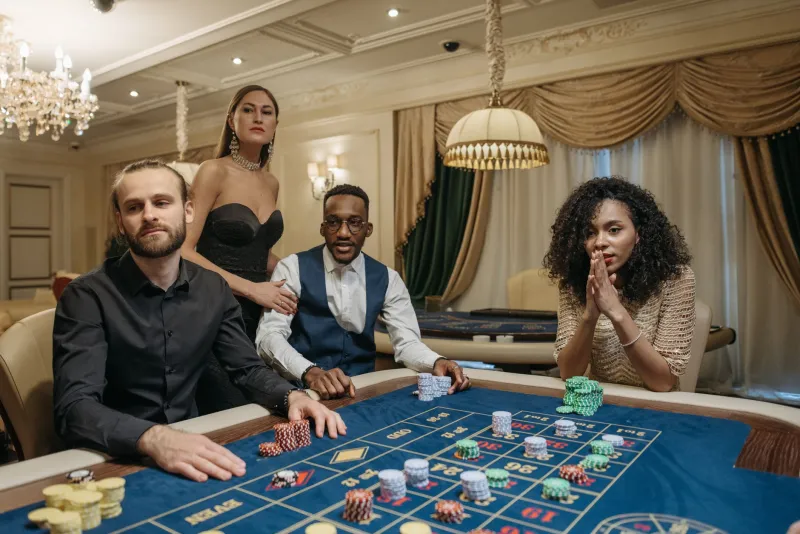
The growth of premium private gaming suites across Australia's major cities has created new possibilities for environmental mastery. At venues that cater to the highest tier of player, bespoke suite arrangements are increasingly offered as a matter of course — where lighting, temperature, furniture configuration, and even olfactory elements can be specified in advance.
For the serious player, this represents a significant competitive advantage. A session conducted within a precisely calibrated private environment is, neurologically and physiologically, a different proposition from one conducted on a general floor. The absence of environmental friction — the small, constant stressors that characterise shared spaces — preserves cognitive resources that translate directly into sharper, more consistent play across extended periods.
This is the logic behind the premium. It is not merely comfort being purchased. It is cognitive performance, preserved and protected across the duration of a session.
Environmental Mastery as Competitive Philosophy
What distinguishes Australia's most accomplished casino players is not simply their technical knowledge of games, nor their psychological resilience in the face of variance. It is the breadth of their strategic thinking — the recognition that competitive advantage exists not only at the table but in every dimension of the playing environment.
Engineering that environment is not a passive act. It requires prior knowledge of one's own cognitive responses, an understanding of the science that governs those responses, and the discipline to act on that understanding before a session begins rather than attempting to compensate mid-play.
The elite player who enters a session having already curated the light, temperature, acoustic texture, and spatial arrangement of their environment has, in a very real sense, already made their first strategic move. And it is one their opponents have yet to consider.